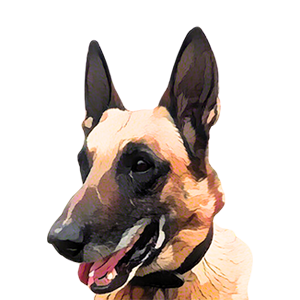
We provide PSIRA-recognised (#2471961) and SASSETA-accredited (#151999692393) training in Dog Handling (DH1-DH5), and further modules.
The training includes a basic overview of essential equipment, as well as guidelines for kennel cleaning and maintenance. Participants will learn fundamental obedience training techniques and how to perform basic health checks on dogs. The course also covers methods for the prevention and control of internal and external parasites. Additionally, there will be training on the safe transport of service dogs and ensuring their overall safety. An overview of different working dog breeds and their applications will also be provided.
The training includes assessing areas of duty to inform decision-making and planning tasks accordingly. Participants will also receive instruction on basic bite training. The course covers the assessment of areas to be patrolled, consideration of environmental factors, and the fundamentals of attack and defense. It will also address legal protocols, the development of patrol plans, and proper patrolling techniques.
The training covers planning the infrastructure of kennel practices, including record keeping and the management of physical resources. It also addresses stock rotation, pest control, and the supervision and administration of personnel. Additionally, participants will learn about canine conditioning to ensure the dogs are in optimal health and performance condition.
In K9 training, apprehension training prepares service dogs to assist in safely detaining suspects by teaching them to pursue, subdue, and hold individuals until law enforcement takes over. Dogs are trained in bite work, learning to target non-lethal areas like arms or legs, and to release on command. They are also taught to pursue suspects using scent and sight, while remaining focused and responsive to the handler's commands. Obedience and control are crucial throughout the process to ensure the dog follows orders and disengages when needed.
Additionally, apprehension training includes handler protection, where dogs learn to defend their handlers if necessary. The training emphasises legal and ethical use of force. Dogs are also exposed to real-life scenarios to prepare for unpredictable situations. This specialised training equips K9 units to effectively handle apprehensions while prioritising safety and professionalism.
This training includes specialised instruction in substance detection.
Students receive advanced training in several specific areas, including Explosives Detection (EDD), and and Narcotics Detection (NDD). Depending on client requirements, dog teams can be trained in other substances, including endangered wildlife and other contraband, arson detection and research and development projects.
Evaluating the use of equipment and accessories for the socialisation and conditioning of service dogs (SAQA Unit Standard 120471) involves assessing various tools that aid in training dogs to develop social skills and conditioned responses. Key equipment includes leashes, collars, training aids, crates, and socialisation props, all of which are evaluated for their effectiveness in enhancing the dogs' ability to interact positively with people, other animals, and different environments. The evaluation also examines the training techniques employed alongside the equipment, focusing on methods such as positive reinforcement and desensitisation, to ensure they foster desired behaviours in real-world scenarios.
Additionally, the evaluation considers the safety and psychological well-being of the dogs, ensuring that the equipment is safe and supports a positive training environment. The effectiveness of the equipment is gauged through observations of the dogs' behaviour during training sessions, alongside feedback from trainers and handlers. Ultimately, this evaluation aims to recommend best practices for selecting and utilising equipment that enhances the socialisation and conditioning of service dogs, ensuring they are well-prepared for their important roles in assisting individuals with disabilities.
Conditioning a Service Dog in Obedience (SAQA Unit Standard 120458) focuses on training service dogs to respond reliably to commands and behave appropriately in various environments. The process begins with teaching fundamental commands such as sit, stay, come, heel, and down, which are essential for the dog's safety and functionality. Positive reinforcement techniques, such as treats and praise, are employed to encourage desired behaviours. Consistency in commands and clarity in communication are crucial for effective training, as they help build the dog's confidence and understanding of expectations.
Additionally, the training includes socialisation to expose service dogs to different environments, people, and other animals, preparing them for real-world situations. Distraction training is also essential, as service dogs must remain focused on commands despite external stimuli. Regular assessments of the dog's progress ensure that they master the commands and adapt to various challenges. Overall, effective obedience conditioning enhances a service dog's ability to perform tasks and support individuals with disabilities safely and confidently.
Maintaining Training Standards of a Trained Service Dog (SAQA Unit Standard 243192) focuses on the ongoing care and evaluation required to ensure that service dogs continue to meet the established training standards throughout their working lives. This process is essential for ensuring the dogs remain reliable and effective in assisting individuals with disabilities.
Key components of this unit standard include regular assessments of the dog's performance and behavior to identify any areas needing improvement. Handlers must implement refresher training sessions to reinforce commands and skills, ensuring that the dog can respond appropriately in various environments. Additionally, maintaining the dog's physical health through proper exercise, nutrition, and veterinary care is crucial for sustaining their training and performance capabilities. By systematically monitoring and enhancing a service dog's training, handlers ensure the animal remains well-prepared to perform its duties effectively and safely, thereby maximising its support for individuals in need.
We offer SASSETA-accredited training for both new handlers and unaccredited handlers with previous training. Please view our Capability Statement for detailed information.
The duration for the full time DH1-DH5 course is 12 weeks, Monday to Friday. Each subject runs for 2 weeks at a time. Our general class hours are 08:00 – 16:00, and we finish between 12:00 and 14:00 on Fridays.
You are not required to complete all five levels at the same time. You can complete one unit standard at a time, and you may spread them out to suit your availability.
Unit Standard 243188 and Unit Standard 243190 are compulsory (fundamentals); the rest of the Unit Standards are electives. However, in order to receive accreditation for any subject, it is necessary to have completed the module that precedes it. The training is both theoretical and hands-on, and integrates with the day-to-day activities at the kennels.
The minimum admission requirement is a completed South African Grade 10 (or equivalent), or higher. A year-end report or academic statement will be sufficient. You will also need to bring along your original ID document or passport – photocopies, temporary documents and drivers’ licenses are unfortunately not permitted.
Please take note that the course is presented in English, and you will need to have a basic functional command of the language.
PSIRA registration is not required for admission into training, but you will need to be registered with PSIRA before you will be permitted to work as a dog handler in South Africa. We recommend completing this training as soon as possible, so that your PSIRA profile is already in place once your K9 qualifications are done. Non-South African citizens may not register with PSIRA, and in such a case, it is up to the individual to find out the requirements of the regulator in their country of origin.
To be a South African dog handler, you will need a minimum of PSIRA E, D and C grades. We can assist with this training – please enquire if you need assistance with this.
Please refer to the attached Generic Quote for a breakdown of current prices.
It is compulsory for all students to be in possession of the correct dog handling equipment for the course. This DH Training Kit is added to the above at an additional cost (prices may vary depending on import prices of materials at the time of quoting), and the equipment remains the student’s property upon completion of the course. Self-catering accommodation is quoted per module (2 weeks), and will be worked out based on how many modules the student enrols for.
You might be eligible for Recognition of Prior Learning. Please have a look at the RPL requirements here.
Each RPL module is priced at R2990.00 (incl). Your total will be calculated by taking into account how many RPL modules you sign up for. Admission into RPL is subject to the completion of a pre-assessment, at no cost. The goal of the pre-assessment: to provide an informal platform where randomly selected specific outcomes of the assessment criteria are checked for validity and currency, and to gauge applicants' broad competency against these outcomes, to determine whether their practical skills and knowledge are up to date with requirements of the Unit Standard Specific Outcomes. The pre-assessment is neither a formal assessment, nor does it impact the learning outcome of the candidate. It is also not a full and comprehensive assessment; it assesses an overview of required skills as a random sample. It serves to identify whether the candidate is suitable for the RPL process, or whether retraining is required in any area/s.
The duration of the RPL course is a maximum of 5 full days. You will need to submit evidence of any previous training/experience, whether accredited or not, as well as a one-page typed motivational letter and CV upon application.
The duration of the RPL course is a maximum of 5 full days.
On-site self-catering accommodation is available at the campus. We provide shared units equipped with beds, mattresses, and fridges. Students need to provide their own food, bedding, and other personal effects. Our kitchen is equipped with a stove, washing machine, deep freeze, and cooking equipment. Students are welcome to bring their own cooking equipment if they prefer, although Genesis K9 Group takes no responsibility for personal property.
Should you prefer to stay offsite, we can refer you to accommodation in the surrounding area.
During the course, you will have the opportunity to work with various dogs across a range of disciplines, at different levels of training. Based on the availability of accommodation, you are welcome to bring your own dog along, and you will have the opportunity to work with them during the course, although not exclusively.
Pay the registration deposit as soon as possible to secure your place, using the banking details provided on the invoice. Remember to use your name and surname as a reference and send proof of payment to payments@gk9group.com.
The registration deposit is non-refundable and will be forfeited if you do not attend the course as agreed.
You also need to provide a copy of your highest academic qualification and arrive with your original identity document. Foreign students must please bring along their passport.
Yes you can at no extra cost. You will have to look after your dog and provide food for it. You will still train with our dogs as well as your own dog.
We will issue you with two T-shirts and a cap. We use this when we go out or visit other facilities. You can purchase more if you want. You can bring any type of comfortable shirts and pants. Long pants are advisable for tracking activities. Closed durable shoes. Pack some training shoes and clothes as well, since we’ll do PT in the mornings. Water boots are always a good choice for the kennel cleaning activities. Bear in mind that you will get dirty and your clothes will possibly endure some punishment.
All the facilities are shared by the students. Depending on how many students attend our course, you will share a room with one or two students. Some of the rooms can accommodate more students. We try to allow students as much privacy as possible, but it all depends on the size of the group.
No, we do not. You will have to bring your own food supplies. A shared kitchen with all the necessary amenities is available. There is also daily trips to shops to stock-up on supplies.
The bathroom consists of two showers, two toilets and one basin. This is shared between the students with a lockable door for privacy.
Yes, we do provide Wi-Fi. This is mainly used during the day for communication amongst the students and facilitators. It is also used for sharing photos and other information. During the night we speed the Wi-Fi up.
No. Training happens from Monday mornings to Friday afternoons. We try to stick to office hours and we aim to finish a little bit earlier on Friday afternoons. We might go over the time schedule depending on weather conditions and phases of training. (night tracking or nigh bite work for example) We might also go-away one or two weekends during the course, this will be communicated before the time.
Once you are enrolled, you will be added to a WhatsApp group and email list.
Yes. A non-refundable deposit of R500 will be necessary to book a space for you on the course.
Upon start of the course a payment of 50% of the total cost is expected. The other 50% will be due at the halfway point of the course. A discounted price is applicable if you pay everything in one amount.
You can, but this is not advisable. Each Unit Standard has an allotted number of nominal hours which should be reached. This is not an ideal option and will take longer with a break in continuity.
There is currently a huge demand for qualified dog handlers. Although we cannot guarantee employment and we are not a recruiting agency, we have a proofed employment rate of over 90% of all our students finding employment after the course. During the course you will meet a lot of our clients and relevant role players in the canine industry and get the chance to interact with them. This will enhance your chances of employment. Typically, our students go on and become detection dog handlers at the airports, armed reaction officers for security companies and/or anti-poaching units. Some find jobs at kennels or start their own dog-training businesses.
We will pick you up and drop you off at the airport and/or bus station at the start and end of the course. During training there will be daily transport to shops available.
We treat each individual student as a member of the family and will do our utmost to ensure that you are successful. There are mandatory academic and physical standards which you will need to achieve, but we will give you as much assistance as possible. We make use of translators, after hour extra classes, extra time during exams and any other support we can give.
Working with dogs is a physical demanding job (especially tracking dogs!) and you will have to be reasonably fit upon arrival. During the course we will do daily PT sessions slowly building up the fitness levels. Nothing will be too demanding, I promise 😊
Each student is issued a full set of high-quality dog handling equipment as part of the invoice which will stay their property. If you have dog equipment, you are welcome to bring it along. If it does not adhere to our standard of quality, we will issue you with a set of high-quality industry approved equipment.
Class 1 of the year starts very hot and humid. Bring sunscreen and mosquito spray. The course moves into Autumn cooling enough down at the end to warrant a light jacket. Lots of rain during this class, so bring some raingear.
Class 2 is the Winter class. The first part is bearable, but then temperatures start dropping to below 10Degrees Celsius in the mornings and the green vegetation starts turning brown. Make sure you bring warm bedding and a thick jacket.
Class 3 is the Spring class. We start at cool temperatures moving from dark mornings to earlier sunrises and possible rain. During the final month of training everything starts turning green again.
No, although we do have mosquitoes, we fall outside the malaria danger zone.
No, during South African Public Holidays we are closed.
Yes, you can leave the property at any time after hours. Over weekends you can go home. The students from other provinces can get special permission to extend their weekends. We deal with this on a case-to-case basis.
All the basics are covered, but it is advisable to bring as much possible of your own kitchen utensils since all the students share the kitchen and utensils. If you don’t have, we will provide you with the necessary.
We provide beds and mattresses. Bring a pillow and any kind of comfortable bedding like sheets and blankets, duvet’s or sleeping bags.
We have an industrial type washing machine available for all your laundry needs.
You are free to do what you want after hours. We have a swimming pool, braai facilities, volleyball and soccer field. Most students study, cook, recover from the day’s activities, walk their dogs or just relax.
Part of the course and final assessment involves theory lessons and exams. Our classrooms are equipped with air conditioning, projectors, white boards and all the necessary equipment. We plan classes to coincide with weather (hot times of the day and/or rain). You will most likely spend 30% of your time in a classroom.
Yes, we do. We have certified narcotic detection dog teams as well as explosive detection dog teams which we can send to any location to conduct random, ad hoc or fixed term searches.
Although we do our best to work as safely as possible, nothing is guaranteed. In the unlikely event of a dog bite, we will apply first aid and get you medical attention ASAP. All our dogs are vaccinated against Rabies, but we strongly advise a Tetanus shot before starting the course.
English is the medium of training. If you experience a language issue, we will do our best to accommodate you as far as possible. We can cater for all of South Africa’s official languages. We’ve even had French students!